
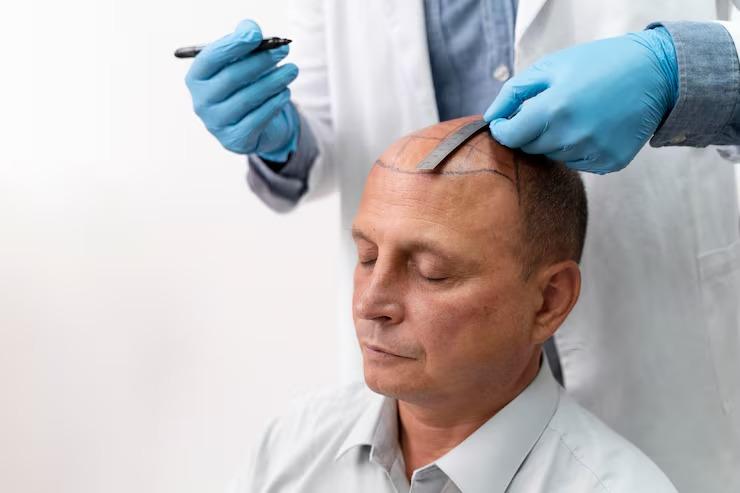
Hair transplantation in the men's community
Hair transplantation is a very common and sought-after procedure today due to its remarkable results for patients. For decades, men and women have opted for this procedure to revitalize their lives and enhance their appearance, aiming to promote aesthetics. So, what exactly is hair transplantation? What are its risks and outcomes for men? Is it beneficial and effective for men?
What is hair transplantation for men?
Essentially, it's a procedure where hair is taken from a hairy area of the body and transplanted to an area with thinning or no hair, such as the mustache, jawline, bald patches, or other areas of the body favored by men.
Specialists perform this procedure by extracting skin grafts from a hairy area in a process called "harvesting," and then placing them in the bald patch or target area in a process called "implantation."
This procedure may seem simple and easy to people, but it is more complex than they think. Skin grafts contain follicular units, which are made up of a small group of hair follicles that are implanted into the skin using several methods, such as micrografts. The most technically advanced method is micrografting, in which only one or two hairs are included in each graft. This technique achieves a more natural appearance for the transplanted hair.
Hair transplantation... Why do men undergo this procedure?
These days, men with thinning hair are turning to this procedure to enhance their appearance, whether it's their smile, face, body, or scalp. This boosts their confidence in the eyes of women, especially given the current fashion trends that equate a man's attractiveness with his hairstyle, beard, or mustache.
Is hair transplantation common among men?
Recent studies have shown that hair loss affects more than 60% of men. Therefore, with advancements in medicine and changing societal attitudes, the number of men undergoing hair transplantation has increased. Men today are keeping up with the latest trends and striving to be more attractive to women.
What are the alternatives to hair transplantation?
There are several alternative solutions for men experiencing hair loss that are less invasive or less expensive, such as medications like Minoxidil (Rogaine) or Finasteride (Propecia), or other supplements like vitamin B or L-carnitine-L-tartrate. Lifestyle changes, such as regular exercise and adequate sleep, can also be beneficial.
Currently, a new treatment method has received FDA approval: low-level laser phototherapy.
Are there any instructions to follow after this procedure? Of course, there are some instructions that must be followed to prevent transplant failure or avoid some negative outcomes:
The patient must refrain from touching, rubbing, or scratching the transplanted areas.
Avoid swimming and hot saunas. Avoid direct sun exposure. Avoid anything that might cause sweating. Some important factors to consider regarding hair transplantation:
1- Consider the genetic factors of hair loss in the family: This is important because hair transplantation does not change genes, and hair loss may recur.
2- Hair transplantation can be expensive. The cost may be $4,000–$8,000 or more per procedure.
3- Recovery time: After the hair transplant, the change will be noticeable for about a month. Then, the new hairs will fall out for about five months to regenerate, so you won't see the best results from the hair transplant until about 8 to 12 months after the procedure.
4- For safety, work with a board-certified doctor who is trained and experienced in treating hair loss.
Finally, after discussing this wonderful procedure and its promising results, would you recommend it to others?